Everyone has the right to follow their religion and practice it any way they want. This freedom helps people from different cultures and communities coexist with one another. The only thing is that when it comes to the workplace, the boundaries between work responsibilities and religion might seem blurry.
This is what a manager realized when her employee refused to meet with a client because it went against her religious ideals. The manager was at a loss about how to proceed in such a situation without causing problems.
More info: Mumsnet
RELATED:When a person’s religious beliefs come in the way of their ability to work or carry out tasks, they have to decide what their stance is in that situation

The poster explained that she had hired a Muslim employee and that there had been no issues with her work until she refused to meet a male client as she’d be alone with him
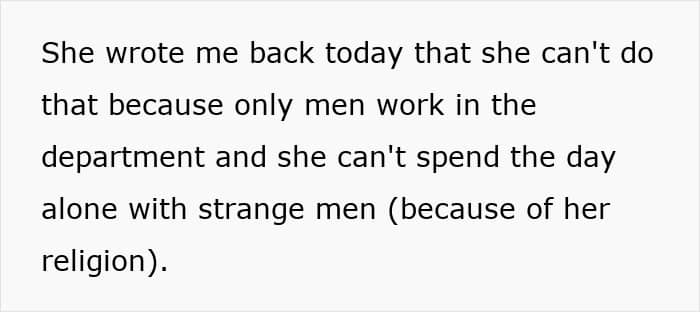

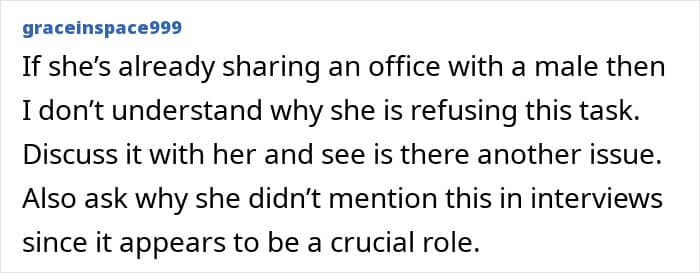
The religious employee also shared an office with a male colleague, so the boss wondered why it would be such a problem for her to meet the client alone
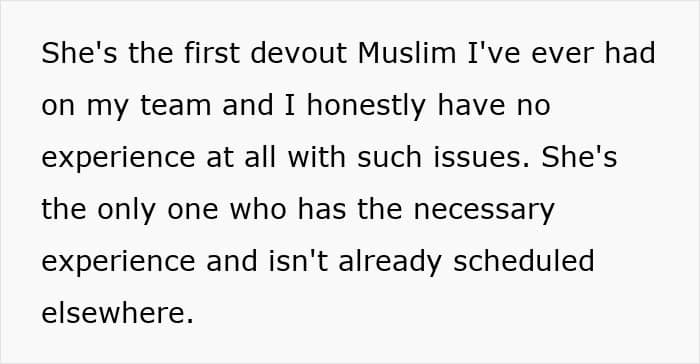
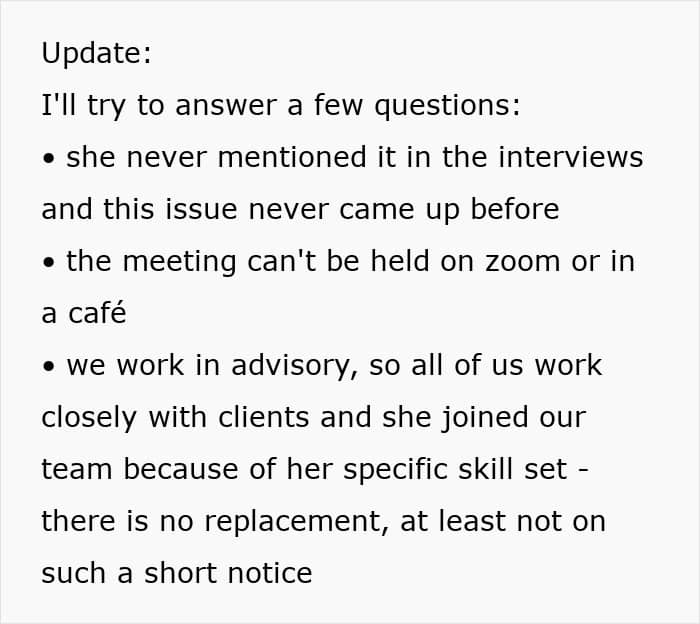
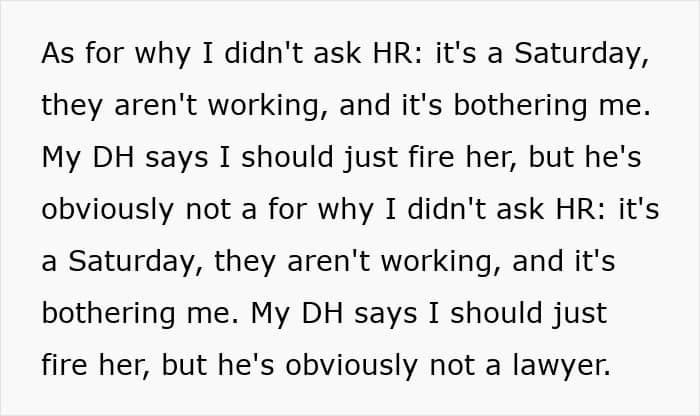
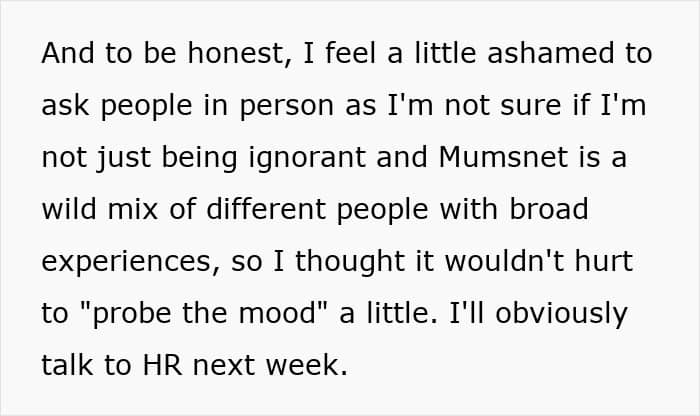
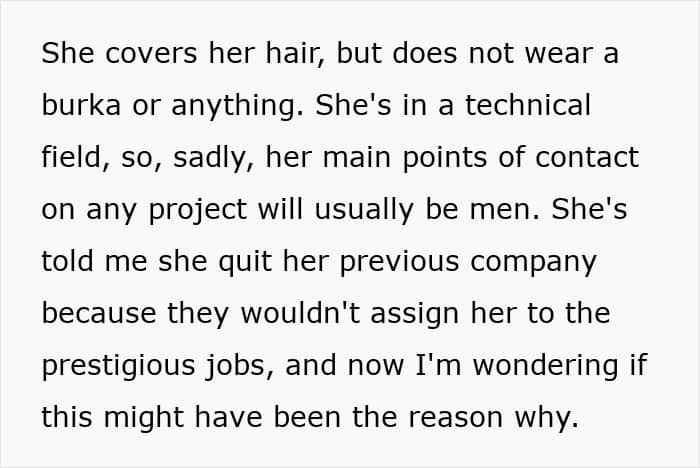

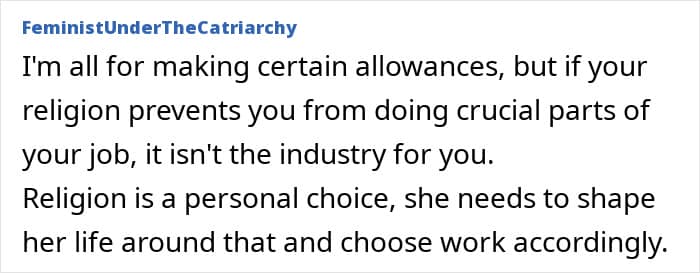
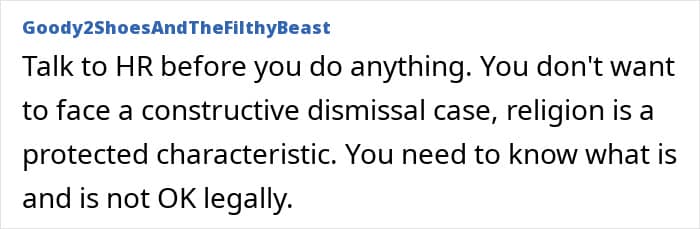
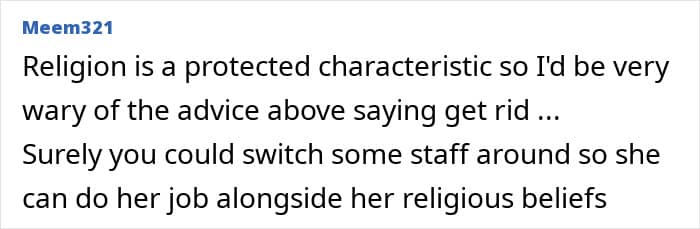
Folks gave many suggestions on how the manager should handle the situation, but after a talk with the Muslim employee, she decided to resign
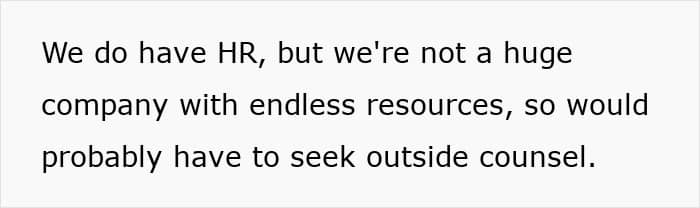
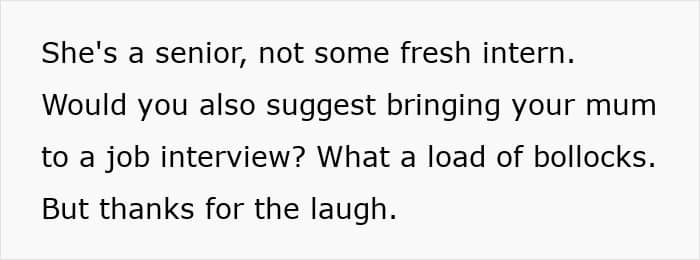
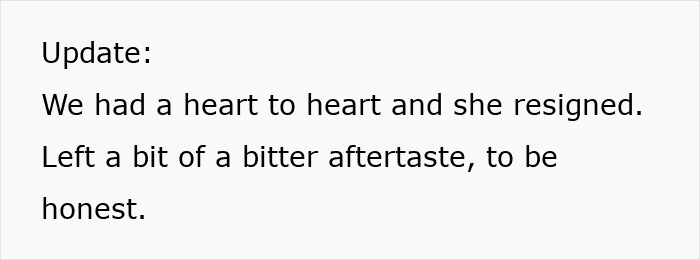
The boss wondered if she would be religiously discriminating against her worker by asking her to meet the client, which is why she had reached out for advice
The poster mentioned that she had hired an employee in January and that the woman was a devout Muslim. There had been no issues with her work or performance so the manager was quite pleased and had given her adequate responsibilities as well. As far as the OP had observed, the employee’s religion did not seem to affect her work.
To understand how leaders should support their staff’s religious beliefs and practices, We reached out to Wendy Sellers, who is known as The HR Lady. She said that “business leaders should create a culture of respect and inclusivity by acknowledging and supporting the diverse religious beliefs and practices of their employees.”
“This can be achieved by providing a space for open communication where employees feel comfortable discussing their religious needs with their manager without fear of judgment. Offering flexibility in work schedules for religious observances, dietary considerations, or dress codes can go a long way in making employees feel valued and respected,” she added.
The poster respected the other woman’s religious beliefs up until they started conflicting with her work. When she had to meet a client alone, she refused to do so, stating that her religion does not allow her to spend time alone with a man. The manager was baffled because the worker shared an office with a male employee and didn’t seem to have a problem with it.
Wendy Sellers explained that “employers should aim to provide reasonable accommodations that allow employees to practice their religion while maintaining a productive work environment. This doesn’t mean fulfilling every request but rather finding practical solutions that do not impose undue hardship on the business.”
“The key is balance: accommodating religious needs as much as possible without negatively affecting the operation or business outcomes. The law mandates reasonable accommodations under Title VII of the Civil Rights Act, so employers should ensure they follow these guidelines while considering the unique circumstances of each situation,” she added.

The boss was caught in a fix because she wanted to respect the Muslim woman’s religious beliefs but also wanted the company’s work to get done smoothly. Nobody else could have handled the client meeting except this worker, which is why there was such a conflict.
Wendy mentioned that “in this situation, the manager should have approached the issue with empathy and understanding. It’s crucial to have an open conversation with the employee to fully understand her religious beliefs and how they influence her work. The manager should aim to find a compromise that respects the employee’s religious values while ensuring business needs are met.”
“One solution for when an employee has a religious conflict like this one: a female employee refusing to meet with a male client alone, the employer could offer alternatives, such as arranging for a female colleague to accompany the employee or scheduling meetings that align with religious observances.”
“The employer could also provide additional training or resources for the team to better understand cultural and religious differences, reducing potential tension and fostering inclusivity. Ultimately, the goal is to maintain a respectful work environment that allows all employees to thrive while respecting their individual beliefs,” she mentioned.
To also understand this situation from another perspective, we reached out to Hemant Mehta, the editor of FriendlyAtheist.com. He mentioned that “the expectations of the job should have been made clear to the employee beforehand. If there was a chance she might have to meet with men alone, she should have been told that before being given the job.”
“The boss should accommodate her if possible but if it becomes a burden on the business, and they cannot accommodate her religious requests, only then would they legally be able to fire her.”
“This is kind of like when Christian pharmacists say they can’t fulfill a prescription for birth control; if someone else on staff can do it, it’s not a huge deal, but if the patient can’t get what they need, now you have to wonder why this pharmacist was hired at all. Simply put, if you can’t do what the job requires, you should find a new line of work,” he mentioned.
Religious beliefs don’t just disappear into thin air when someone works in a company. That’s why organizations need to be respectful of people’s lifestyles and cultures while also setting work expectations right from the start.
What do you think the manager should have done in this situation? We’d love to hear your honest thoughts.
Folks provided the poster with many suggestions, from talking to Human Resources to even letting the woman go