As graduation day approaches, one of the main things on a student’s mind is their attire and how they want to present themselves during this significant milestone. After all, with countless pictures being taken, why not celebrate your accomplishments in style?
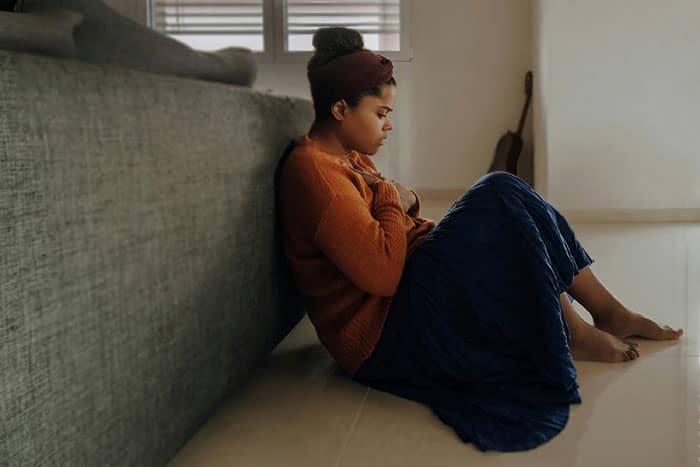
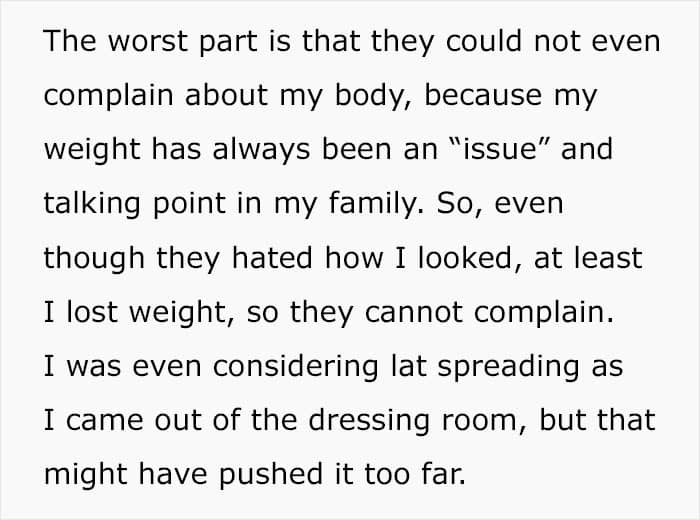
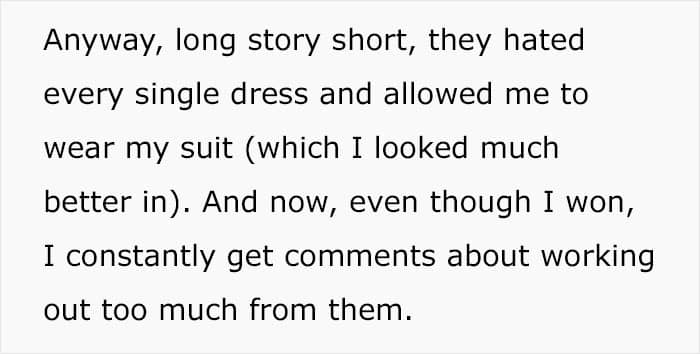
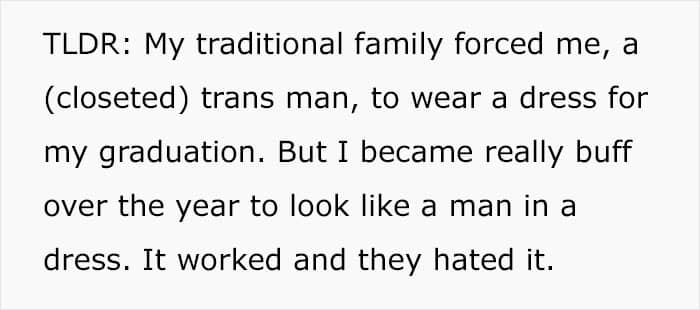
However, Reddit user Flashy_Imagination83r couldn’t wear the suit he wanted. The trans man has what he calls a traditional family, and they pressured him into putting on a dress.
But as he explained in the subreddit ‘Malicious Compliance,’ this eventually worked out really well, as the graduate used the opportunity to send his folks a message they wouldn’t forget.
RELATED:This trans man picked out a nice suit for his graduation, but his family wanted him to wear a dress
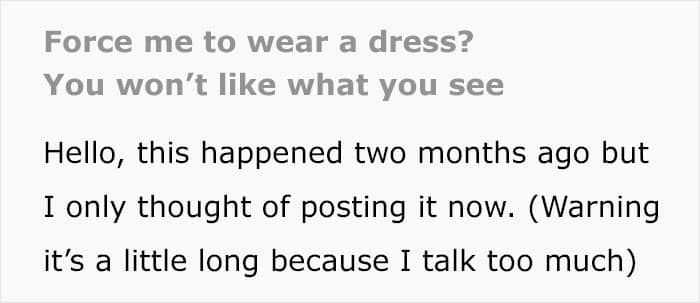
So he maliciously complied

Our clothes are a crucial aspect of self-expression

Clothes are more than just about the look. Especially for teens, who often use their wardrobe to explore their identity.
“While the infant was unintentionally adorable, and the child learned how to act appealing, now the teenager intentionally strives to look attractive,” psychologist Dr. Carl E Pickhardt writes.
“Social acceptance, attention, approval, and affiliation can sometimes feel at stake. Physical appearance is social identification — how you are identified, and sometimes treated.”
The largest survey of transgender Americans ever conducted has showed trans people continue to suffer discrimination, harassment and even violence at work, in medicine, and at school – but that people who transition have much higher satisfaction in life.
The 2022 US Trans Survey found that 94% of transgender individuals who live at least part of the time in a gender different from the one they were assigned at birth – in other words, who “transitioned” – were either “a lot” (79%) or “a little more satisfied” (15%) with their lives.
So the fact that Flashy_Imagination83 couldn’t even wear what he wanted had no doubt made it even harder for him to navigate an already difficult period.
However, it’s probably worth mentioning that stories of such dismissive families aren’t that common. The aforementioned report also found that 43% of trans individuals aged 16-17 said their families were, in fact, supportive.
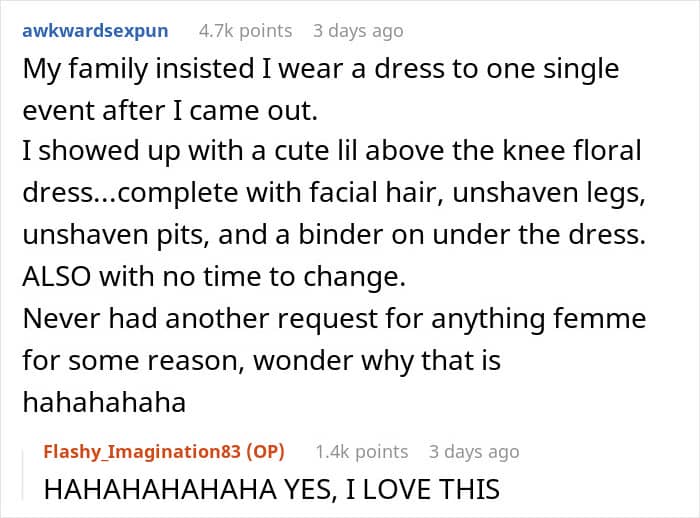
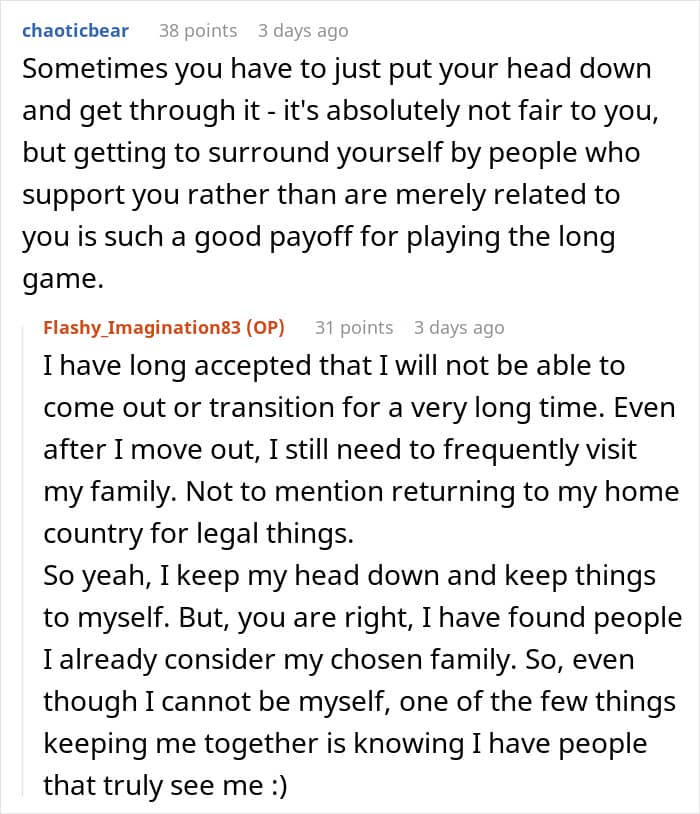
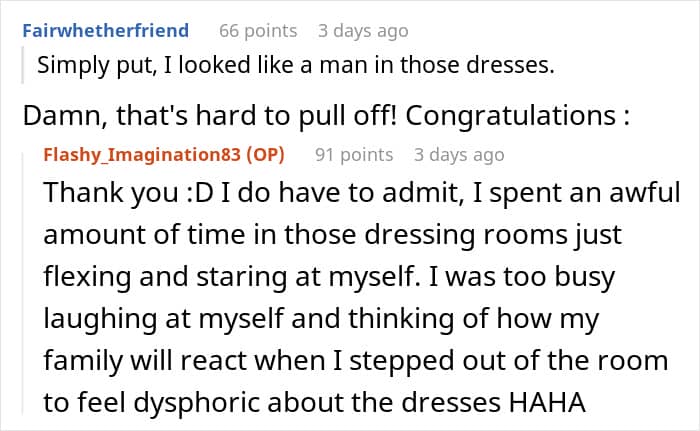
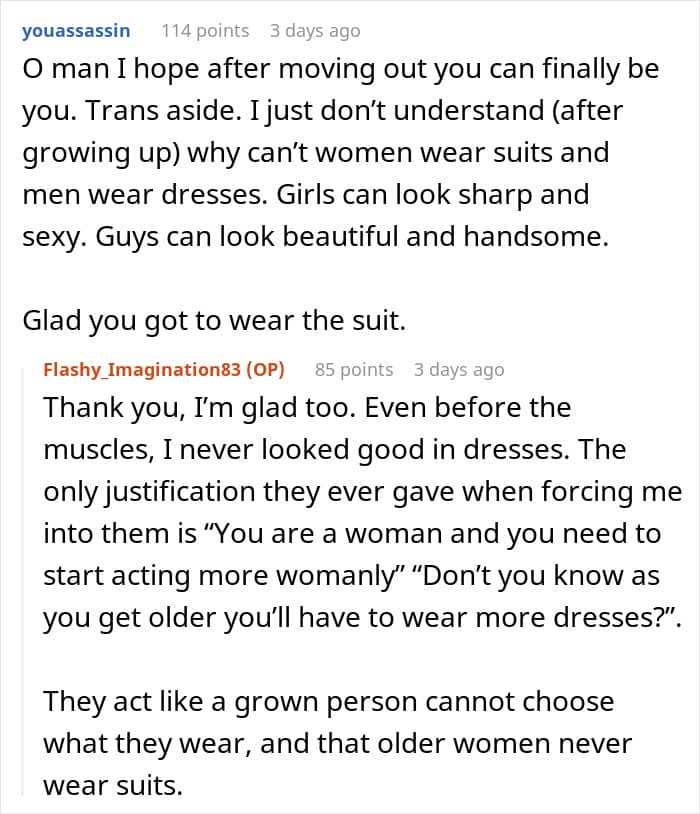
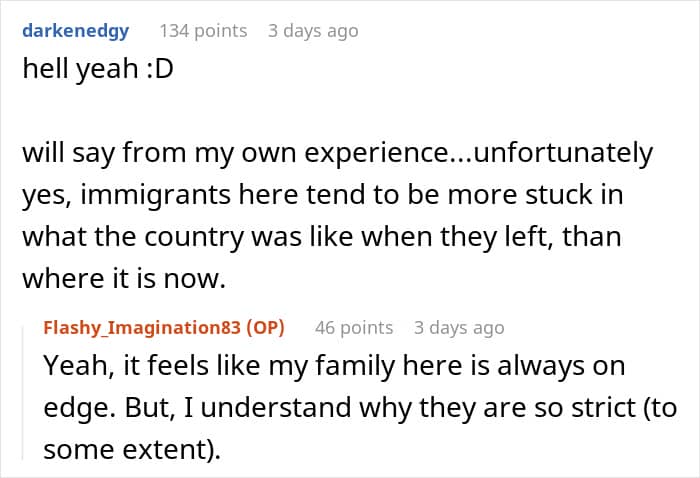
As people reacted to his story, many supported the man

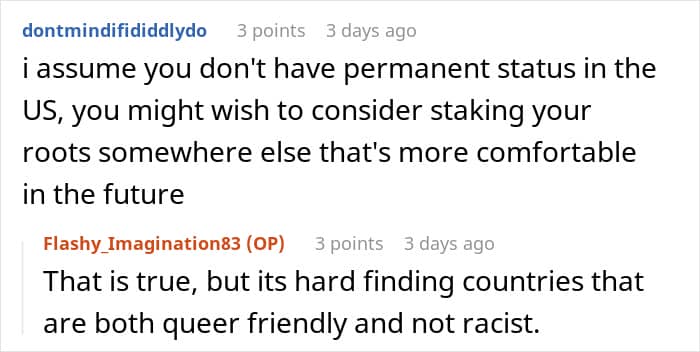

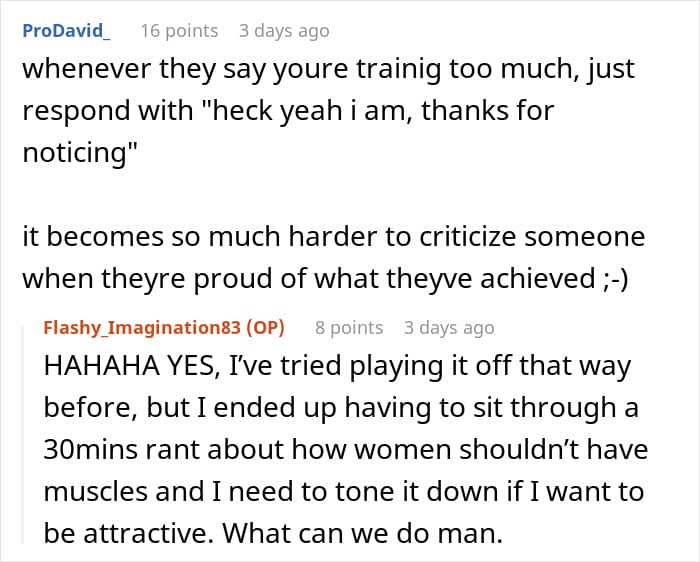

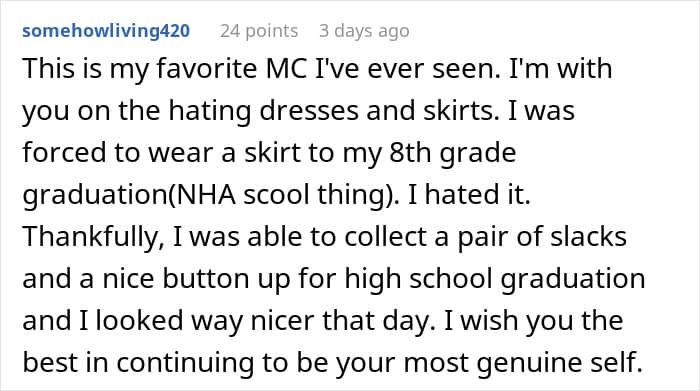
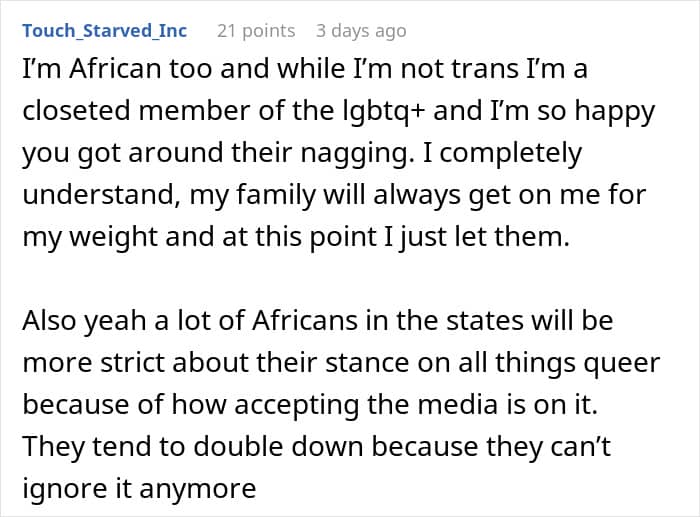


But some believe he could’ve handled things better